


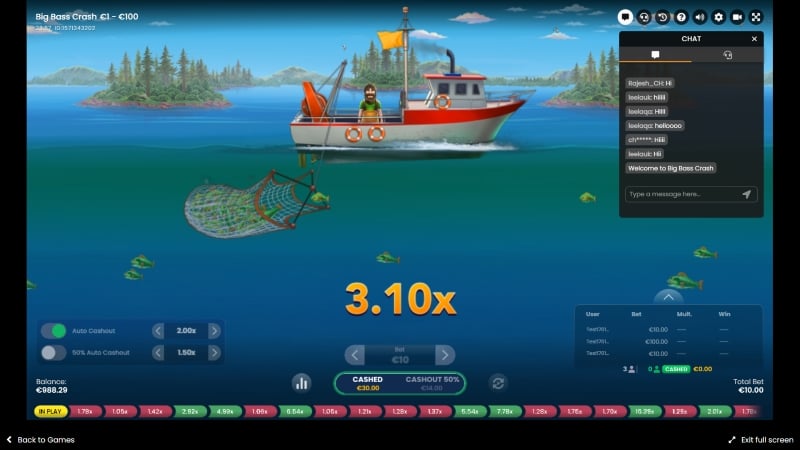
If you are looking to get the best results from an online game, you must understand how it awards payouts https://bigbasscrash.eu/. For UK players trying their luck with the Big Bass Crash Game, deciphering the winning combinations and reward system turns casual play into a more strategic approach. This guide explains in detail precisely how the payouts work. We will analyze the game’s unique multiplier feature and break down every symbol combination that triggers a win. The goal is to give you a clear picture of the game’s inner workings, so you can take on its fishing-themed action with your eyes wide open.
The Purpose of the Crash Multiplier Feature
The main attraction in Big Bass Crash Game is the Crash multiplier feature. It is not a separate bonus game. It is a multiplier system embedded within the base game that triggers upon any cascade. Under specific conditions, often by hitting special symbols, a multiplier wheel or meter springs to life. The multiplier can skyrocket to high values such as 100x, 500x, or even higher. It then applies to the next winning cluster that appears. The thrill comes from anticipating that ‘crash’ and hoping a decent cluster lands to take advantage of it. This mechanic is responsible for the game’s largest possible wins, blending the typical cluster wins with a high-volatility, escalating multiplier.
Special Symbols and Their Own Functions
Standard symbols are just part of the story. Unique icons are your ticket to greater payouts and bonus features. The most common is the Wild symbol. It can act for any standard symbol to form or expand a winning cluster. One other important one is the Scatter or Feature symbol, frequently a golden coin or a special lure. Hitting enough of these usually starts the Free Spins bonus round. You might also encounter dedicated multiplier symbols or collector symbols that supply to the Crash multiplier meter directly. Understanding these special symbols is vital. They are the activators that move you past the base game and into the high-reward phases that numerous UK players chase.
The Payout Structure of Standard Symbols
The game sorts its regular symbols into a clear pecking order, each with a set value. Lower‑paying symbols tend to be things like fishing floats or minnows. The symbols with bigger rewards are the bigger, more impressive catches like marlins or groupers. At the top of this hierarchy is always the Big Bass icon. Your final payout depends on two things: the size of the cluster you make and the symbol’s worth in the cluster. A cluster of five low‑tier symbols gives you a small return. But a cluster of eight or nine Big Bass symbols can deliver a win that changes your session. It pays to recognize these symbols and know their importance. This knowledge lets you judge the potential of every cascade as it happens. The game’s paytable contains the precise numbers for each symbol and cluster size – it’s always worth a look.
Breaking Down Low‑Value vs. High‑Value Icons
Let’s organize the symbols for a clear hierarchy. The lower‑value group usually includes playing card symbols (10, J, Q, K, A), often given a slight fishing makeover. These symbols land regularly and keep the game moving. The medium‑payout and high‑payout icons are the fish and creatures with fishing themes. Mid‑tier examples include a pike or a perch. The highest‑paying symbols, such as a trophy fish or the fisherman, deliver much bigger rewards. Getting a feel for this range helps you instantly know how good any cluster is. The rare appearance of these high‑value icons aligns with the game’s risk‑reward design.
Example of a Mid‑Value Symbol Payout
Consider a hypothetical mid‑value symbol, for example a ‘Trophy Pike’. The game’s paytable reveals that five clustered symbols pay 15 times your bet. Nine clustered symbols may award 150 times your bet. This increase demonstrates the importance of larger clusters. In contrast, a low‑value ‘Fishing Hook’ symbol. It could pay just 2x for five and 20x for nine. The difference is stark. It shows that the main goal during standard play is to get lots of high‑tier symbols together. This positions you for the bigger multiplier bonuses.
Where to Find Standard Prize Table Data
The best source for the exact payout details is always the game’s own paytable. You can open it via the information or ‘i’ icon on the game screen. The paytable offers a comprehensive breakdown, including
- The exact payout for every symbol at every possible cluster size.
- The rules for how clusters form, usually with illustrations.
- A detailed overview of the Crash multiplier feature and its limits.
- Clear terms for triggering the Free Spins round and what happens during it.
- The role of all special symbols, like the Wild and Scatter.
We recommend all players, particularly those in the UK who are new to the game, review this paytable before starting. It is the definitive reference on the game’s statistical model and reward structure. Checking it means you will not be surprised by how your winnings are calculated and distributed.
Key Thoughts for UK Players
The round’s outcomes are generated by a Random Number Generator, but however you can plan tactically regarding your betting and playing. First, understanding the payout table enables you choose your bet size wisely. Since the biggest wins are from multiplier features, it is wise to data-api.marketindex.com.au place a bet that meets the highest multiplier possible. Additionally, you ought to control your playtime according to the game’s variance. Defining caps for losses and target goals for winnings is a prudent action. Third, learn the specific criteria needed to trigger the Free Spins round. This allows you to perceive when a round might be building toward a bonus trigger. Good strategy here is about patience. It is about exploiting the game’s rhythm when the multiplier feature fires up, without chasing deficits through the less volatile base game.
Volatility and Payout Frequency: What You Should Know
The mix of cluster pays and a unpredictable Crash multiplier makes Big Bass Crash Game a high-risk title. Payouts might not come often, but when they come, they can be significant. The hit frequency, or how often winning clusters appear, is offset by the size of those wins. During normal gameplay, you can anticipate phases of smaller, consistent wins from low-paying clusters. These are interrupted by more sporadic but much more impactful wins from high-value clusters or hits boosted by the multiplier. For UK players, this setup is ideal if you have a budget that can withstand some dry spells while you wait for the greater prizes. It is a compromise. You pick between steady, modest gratification and the pursuit for one life-changing win.
Concluding Thoughts
The winning results and reward framework in Big Bass Crash Game form a complex structure. It is built on cluster-based wins and boosted by a volatile Crash multiplier. Every part works together, from the graded basic icons to the critical special symbols and the boosted Free Spins bonus. For UK players, getting to grips the its extreme volatility and comprehending how the multiplier functions on clusters forms the basis. Spend time with the official paytable and manage your expectations regarding win frequency grounded. After that, you can connect with the system on a more profound level. You can appreciate the reasoning behind the captivating fishing theme and the real excitement of pursuing its most valuable catches.
Understanding the Core Gameplay and Board
To discuss successful combinations, it’s best to commence with the layout of the game. Big Bass Crash Game uses a dynamic grid where tiles drop into position rather than rotating on reels. This grid is the place where all the action happens. All the symbols match the angling theme, depicting different sea life, pieces of equipment, as well as the coveted Big Bass. You get a payout when a group of identical symbols joins adjacent or vertically above each other. The bigger the group, the greater the payout. This “cluster-pays” system indicates the game has none conventional paylines. Victories can pop up anywhere on the board in various formations, creating plenty of chances with each every new drop of tiles. The thrill of the game comes from this setup, as large, rewarding clusters can form out of nowhere, producing those unexpected ‘crash’ moments for which the game is named.
Common Myths About Payments
A few incorrect beliefs can puzzle players about how the payouts work. One is believing the Crash multiplier is “due” to activate after a extended dry spell. Each cascade is an separate occurrence. Another is overestimating how commonly the Free Spins round triggers. Its occurrence is random and can be extremely uncommon. Some gamblers also get the cluster size wrong. They might think a 2×2 grid of four symbols is better than a row of four, but the game normally just tallies the count of adjacent icons, not their arrangement. In conclusion, many believe that betting more boosts your likelihood of activating special rounds. It does not. A larger bet only raises the potential payout amount, not the underlying chances of the feature occurring. Getting these facts right provides a more accurate and enjoyable experience with the game.
Analysing the Free Spins Bonus Round
The Free Spins round is in which the game frequently reaches its full potential. You trigger it by landing three or more Scatter symbols. This bonus offers you a set number of free cascades. Significantly, the Crash multiplier feature usually gets a power-up for this round. The multiplier could start higher, increase more consistently, or have its cap removed. The game may also add sticky wilds or expanding symbols. Your strategy shifts here. You seek to keep the bonus going as long as you can, often by retriggering more spins, and you attempt to make a large cluster land when the multiplier is at its peak. The payout structure in this round is far more generous than the base game. It is the main strategic target for players.
Multiplier Progression During Free Spins
How the multiplier functions in Free Spins is the key thing to watch. You will generally see two approaches. In the first, the multiplier increases by a fixed amount with each cascade. It goes back down only after it’s been applied to a winning cluster. In the second model, you collect the multiplier from specific symbols. It then accumulates and stays for the whole round, aiming for one huge payout. You need to know which model your game uses. The first provides you more frequent, smaller boosted wins. The second is all about the tension of building towards a single massive hit. Both are designed to make you hold your breath as the number climbs, waiting for the right cluster to cash it all in.